
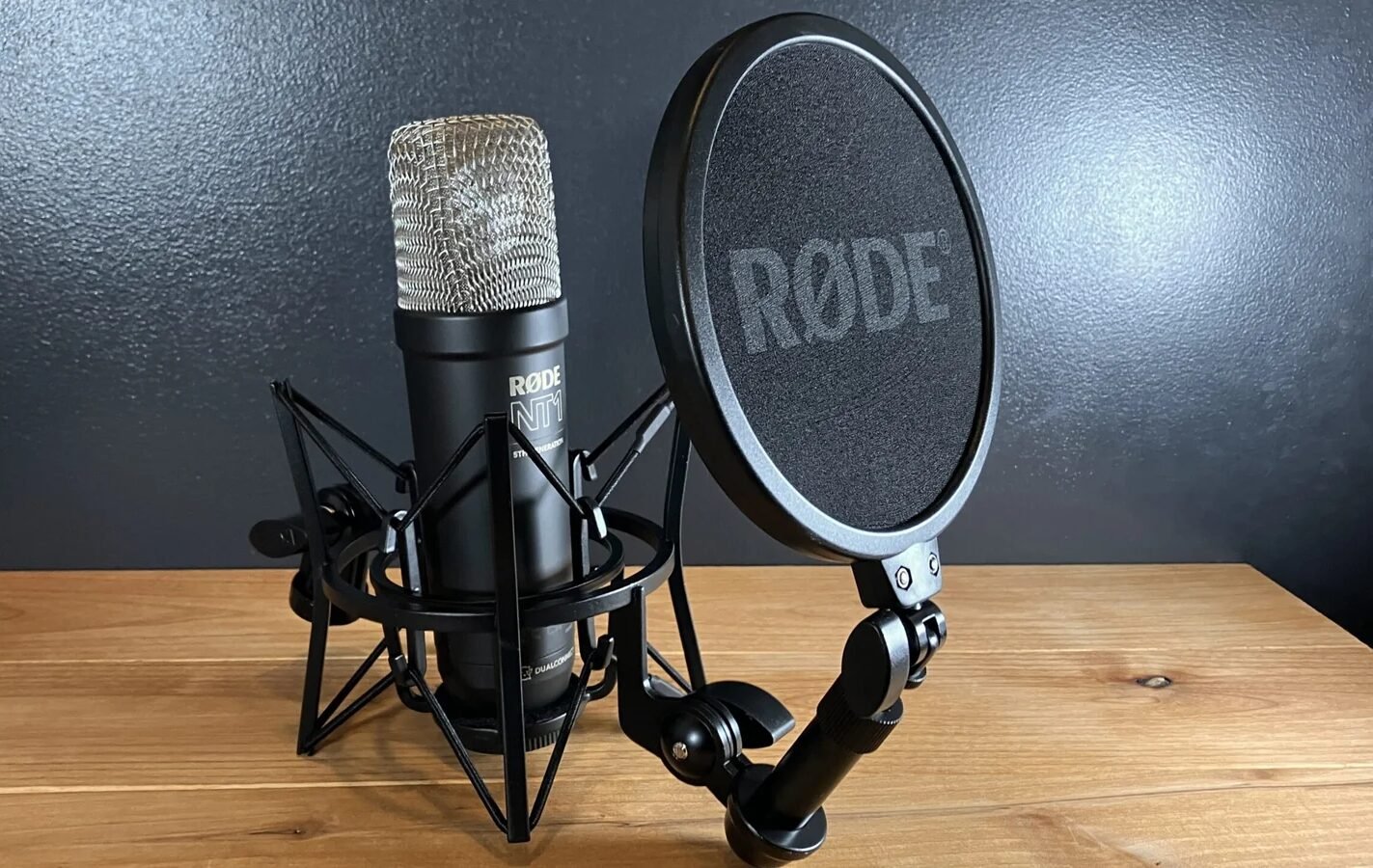
If you’re searching for a studio condenser microphone that combines legendary sound quality with modern convenience and forgiveness for real-world recording mistakes, the Rode NT1 5th Generation stands as one of the absolute best all-rounders available in 2026. This isn’t just an update to the classic NT1 series; it’s a complete evolution that keeps the warm, silky, detailed character people have loved for decades while adding groundbreaking features like ultra-low self-noise, dual connectivity, and that game-changing 32-bit float digital output. Whether you’re doing podcasts, voiceovers, streaming, acoustic guitar tracking, vocals for music, ASMR, or even field recordings, this mic handles it all with exceptional clarity and minimal hassle.
The standout spec is its self-noise level of just 4dBA (A-weighted), which Rode proudly calls the world’s quietest studio condenser microphone. That means virtually no hiss or background noise creeps into your recordings, even in less-than-perfect home setups or when you’re capturing subtle whispers, breaths, or quiet acoustic performances. Pair that with a massive maximum SPL handling of 142dB, and you can slam loud sources like screaming vocals, drums, guitar amps, or brass without distortion. The large-diaphragm cardioid capsule (1-inch gold-sputtered) delivers a smooth frequency response from 20Hz to 20kHz, with natural warmth in the lows, clear and present mids for intelligible speech and vocals, and airy highs that add detail without harshness or sibilance issues.
What makes the 5th Gen truly revolutionary is the patent-pending Dual Connect output: it gives you both analog XLR for connecting to professional interfaces, mixers, or preamps, and direct USB-C digital output for plug-and-play recording straight into your computer, tablet, or phone. In USB mode, it supports high-resolution audio up to 192kHz sampling rate and, most importantly, 32-bit float bit depth. This “unclippable” format captures an enormous dynamic range (over 1500dB theoretically), so even if your input levels spike unexpectedly or you forget to set gain properly, you can recover the audio perfectly in post by simply adjusting the fader in your DAW—no noise added, no distortion baked in, no ruined takes. It’s a lifesaver for live streaming, unpredictable podcast guests, or quick mobile sessions where you can’t babysit levels.
On top of that, the USB connection unlocks onboard DSP processing through Rode’s free Central software, including a compressor, noise gate, high-pass filter (two stages), Aphex Aural Exciter for added presence, and Big Bottom for low-end enhancement. These effects process in real time before hitting your computer, saving CPU and giving polished results right away (though note that full DSP is limited at higher sample rates above 48kHz, and 32-bit float mode prioritizes raw capture over effects).
The package is complete and ready to go: it includes a premium studio-grade shockmount (SM6) to isolate vibrations, a detachable pop filter to control plosives and breath noise, XLR cable for analog use, USB-C cable for digital, and even a handy dust cover. Everything feels high-quality and durable, with a sleek matte black finish that’s resistant to scuffs and looks professional in any setup.
A typical pro-looking rig: the black Rode NT1 5th Gen mounted in its shockmount on a sturdy boom arm or stand, pop filter positioned in front, set against a dark acoustic-treated backdrop or vocal booth for focused recording. The mic’s compact yet substantial body sits centered, connected via USB-C to a laptop displaying your DAW (Reaper, Logic, Audacity, Ableton, or even Rode Connect app), or XLR to an interface like a Scarlett. Headphones nearby for monitoring, and the whole scene screams serious content creation without excess clutter. It excels in imperfect rooms too—the ultra-low noise and tight cardioid pattern reject off-axis sound, room reverb, and computer fan hum far better than cheaper condensers, so you get clean, detailed takes even without a fully treated space.
If you’re upgrading from a basic USB mic like a Blue Yeti or Fifine, the jump is massive: vastly better detail, warmth, and forgiveness, plus the hybrid versatility means you can start simple (direct to computer) and scale up (add preamps or interfaces later) without buying new gear. At around $230 to $250 street price in 2026 (often with sales or bundles dropping it lower), it’s an incredible value for the features, build, and performance. It’s not the absolute cheapest entry-level condenser, but it outperforms many mics costing twice as much in noise, versatility, and future-proofing.
Potential minor caveats: no built-in headphone jack (use your interface or computer’s output for monitoring), and while the DSP is powerful, some advanced effects trade off at ultra-high sample rates. But these are small trade-offs for what you get. In 2026, with remote work, content creation, and hybrid music production still dominating, the Rode NT1 5th Gen is frequently recommended as the ultimate do-it-all condenser for creators who want pro results without complexity.
Grab it if you want a mic that’s quiet enough for intimate work, forgiving enough to save bad takes, versatile enough for any setup, and durable enough to last years. Plug it in (XLR or USB), hit record, and enjoy crystal-clear, professional-sounding audio that makes everything from podcasts to acoustic demos shine. This is the condenser that raises your game without demanding you rebuild your entire rig. music), or tweaks to the tone!