
The Yamaha HS8s: Still the Go-To Flat Monitors for Mixing in 2026
In an era where many studio monitors try to wow you with exaggerated bass, shimmering highs, or artificially colored sound to make mixes feel instantly exciting, the Yamaha HS8 powered studio monitors stand out by doing the opposite. They deliver a flat, honest, uncolored response that tells you exactly what is happening in your track. This truth-telling approach is why they remain a top choice for serious mixing in 2026 among home producers, project studios, and even some professional engineers. What sounds balanced and clear on HS8s tends to translate reliably to cars, earbuds, phone speakers, club systems, streaming platforms, and consumer playback everywhere.
Each HS8 uses an 8-inch white-cone woofer teamed with a 1-inch dome tweeter in a bi-amped design. It sends 75 watts to the woofer and 45 watts to the tweeter, totaling 120 watts of clean power per speaker. The frequency range covers 38 Hz to 30 kHz at minus 10 dB, providing solid low-end extension that feels real and controlled. You get accurate reproduction of kick drums, deep basslines, 808s, and sub frequencies without the bloated or boomy low end that smaller 5-inch or 6.5-inch monitors often add in untreated rooms. The highs come through crisp and detailed yet stay smooth and fatigue-free, never harsh or. Mids stay open and precise, letting you easily place vocals, guitars, synth leads, and percussion elements exactly where they need to sit in the mix.
The real strength lies in their neutrality. Yamaha avoids any hype or flavoring. There is no scooped midrange to make things sound bigger, no pumped treble for fake sparkle, and no added warmth to mask problems. This straightforward presentation forces you to make better mixing decisions because you hear flaws, imbalances, and phase issues clearly instead of having them hidden by colored speakers. That reliability is why so many producers trust HS8s for final mixes that hold up across different systems. In 2026 reviews, user forums, and gear roundups, they consistently rank as one of the best value reference monitors for accurate work.
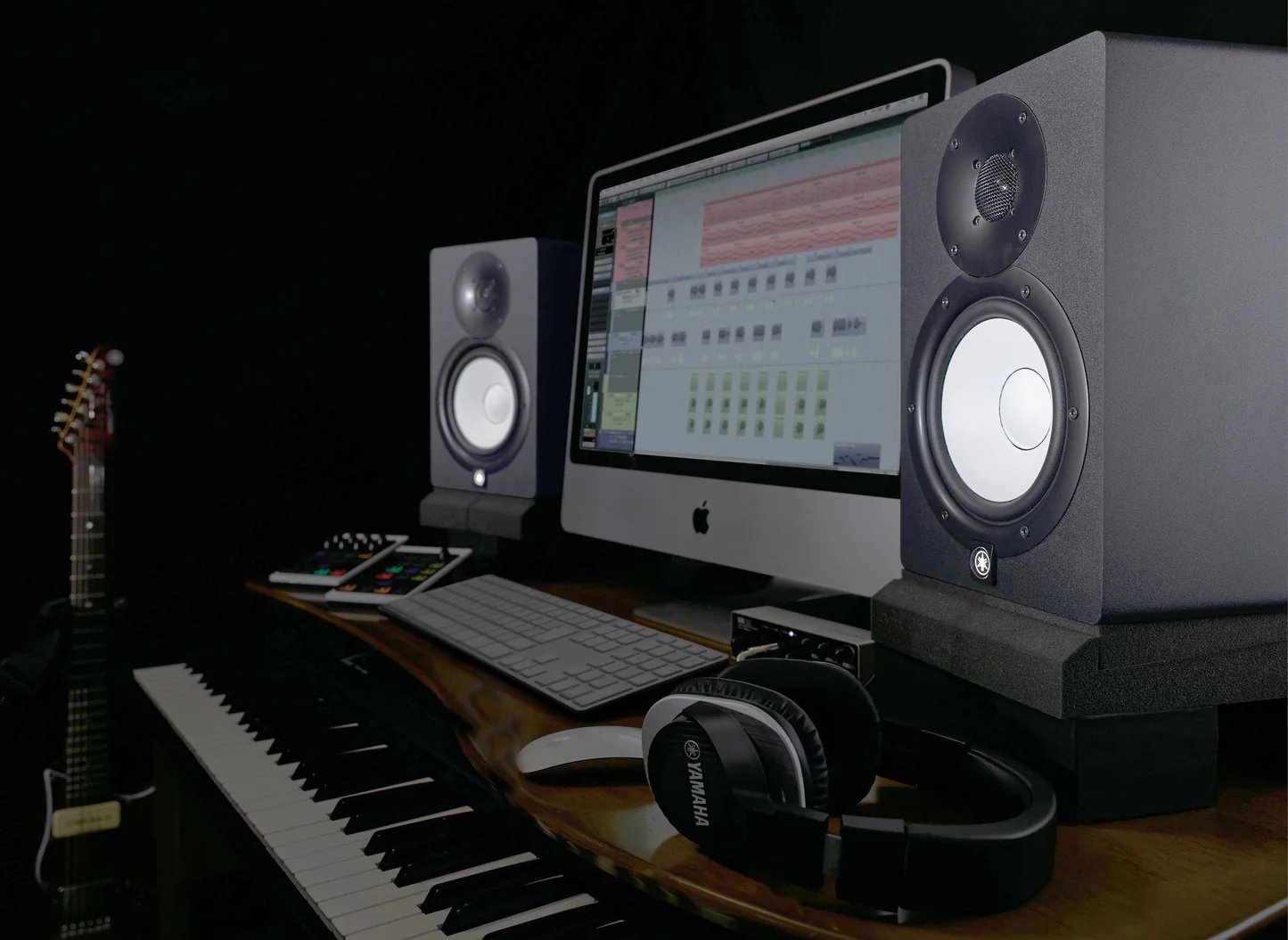
A straightforward setup looks clean and purposeful. Place a matched pair of matte black HS8s on proper monitor stands or isolation pads, position them in an equilateral triangle with your head at the center point, and angle them inward toward your ears. Center your DAW screen between them for easy referencing. Surround the speakers with just the essentials: a controller keyboard, synths, audio interface, and maybe some acoustic treatment. The cabinets use thick MDF with internal bracing and a clever magnetic shielding design to keep resonance and distortion low even when you turn them up for critical listening sessions.
Build quality is another big plus. Drawing from Yamaha’s long history of pro audio (including the legendary NS-10M heritage updated for today), these monitors are tough and consistent over years of heavy use. They do not drift, degrade, or lose accuracy with time. Priced around $399 each (so roughly $800 for the pair, often with bundle discounts or sales bringing it lower), they sit in a sweet spot. They cost more than entry-level options but offer far superior accuracy, imaging, and longevity compared to budget monitors that rely on coloration to impress out of the box.
The rear panel includes helpful room-tuning controls. Use the Room Control switch to cut low frequencies by 2 dB or 4 dB below 500 Hz if bass builds up from walls or corners. The High Trim knob lets you adjust the tweeter output by plus 2 dB, flat, or minus 2 dB to match brighter or darker room acoustics. For maximum precision in imperfect home spaces, add room calibration software like Sonarworks SoundID Reference. It measures your listening position, generates a correction profile, and applies it in real time or as a plugin. This combination turns already solid monitors into near-reference perfection without massive acoustic overhauls.
Potential drawbacks exist. The 8-inch woofers need space and proper placement to shine, so very small desks or untreated rooms might highlight bass issues until you add traps or panels. They are larger and heavier than compact nearfields, requiring sturdy stands to avoid vibrations. But once set up correctly, the benefits outweigh these points by a wide margin. Mixes done on HS8s require less revision when checked on other systems, saving time and frustration.
In summary for 2026: If you want monitors that prioritize accuracy over excitement, skip the colored hype speakers and choose the Yamaha HS8s. They provide trustworthy translation, long-lasting performance, and professional-grade results at a price that makes sense for anyone committed to better mixes. Set them up, trust your ears, and produce tracks that sound great no matter where people play them.